Dental implant or bridge? How to decide
Replacing a missing tooth: what an implant or a bridge means for your neighbouring teeth, your jawbone and long-term care – explained plainly.

When a tooth is missing, most people soon face the same question: should it be an implant or a bridge? Both are fixed solutions – you don't take them out at night – and both can serve you well for many years. The difference lies in how they are built and what they ask of the rest of your mouth.
Below we set out the main points to consider. The final choice, though, is always made together, after an examination, because every mouth is different.
How the two options differ
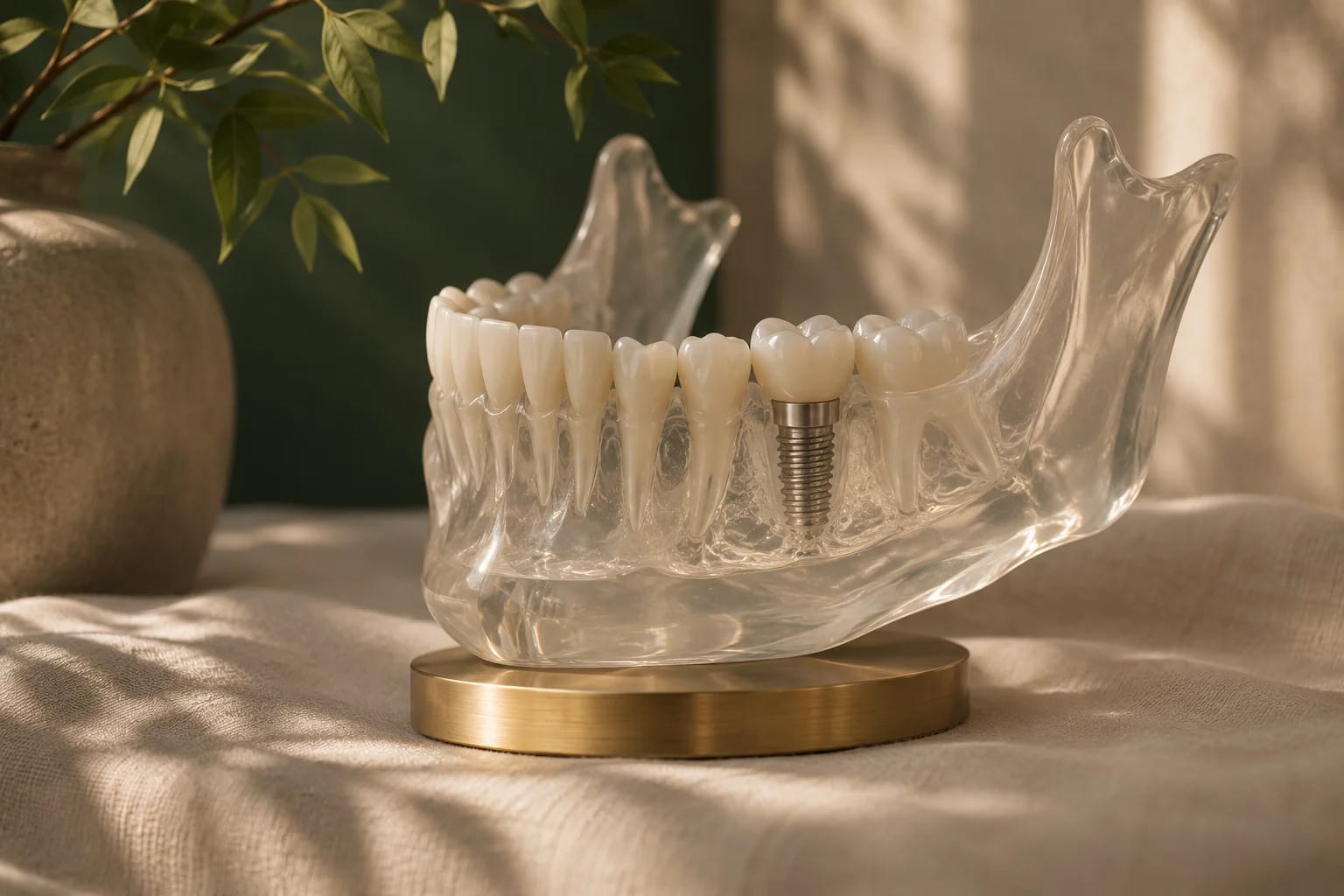
A dental implant is a small, screw-shaped post placed in the jawbone where the root of the missing tooth used to be. As it heals, the bone grows firmly against it, and a crown is later fixed on top. The new tooth stands on its own and does not lean on its neighbours.
A bridge rests on the teeth either side of the gap. These teeth are reshaped and fitted with crowns, and the replacement tooth sits between them. In other words, a bridge is supported by the neighbouring teeth.
What happens to the neighbouring teeth
This is often the deciding factor. If the teeth next to the gap are healthy and largely untouched, a bridge means reshaping them. Once reshaped, they will always need a crown.
With an implant, the neighbouring teeth usually don't need to be touched at all. So if the gap sits between healthy teeth, an implant is often the gentler option.
It is a different story if those teeth already have large fillings or old crowns and would soon need new crowns anyway. In that case a bridge can be a perfectly sensible choice, because no healthy tooth is being sacrificed.
What happens to the jawbone
Where a tooth is missing, the jawbone generally shrinks back gradually over time, because it no longer receives the load of chewing. It is a slow process, but over the years it can become noticeable.
An implant passes chewing forces into the bone, much as a natural root does, which can help to preserve it. Under a bridge there is no root where the missing tooth was, so the bone there may continue to recede.
An implant also needs enough bone to sit in. If there is too little, this can often be addressed with bone grafting or a sinus lift – see our page on oral surgery. How much bone you actually have is shown by a 3D scan, which we take on site at the practice.
How long does treatment take?
A bridge is usually quicker. Over a few appointments – preparation, impressions, a try-in and fitting – it can be in place.
With an implant, the bone needs time to bond with it after placement, generally a few months. If needed, you will have a temporary replacement during this period, so you won't have to live with a gap. The exact timeline is set out in your treatment plan.
Which lasts longer?
There is no single answer that is true for everyone. With careful cleaning and regular check-ups, both can last a long time.
Longevity depends on many things: your oral hygiene, whether you smoke, your general health, your bite and how regularly you come for check-ups. With a bridge, the health of the supporting teeth matters a great deal – if one of them develops a problem later, the whole bridge may be affected. Around an implant, the main risk is inflammation of the gum and bone if cleaning is neglected.
When might each be the better choice?
As a general guide:
- An implant may be suitable if the neighbouring teeth are healthy, there is enough bone (or it can be rebuilt), and your health allows a minor surgical procedure.
- A bridge may make sense if the neighbouring teeth need crowns anyway, if you would rather avoid surgery, or if there is a medical reason not to place an implant.
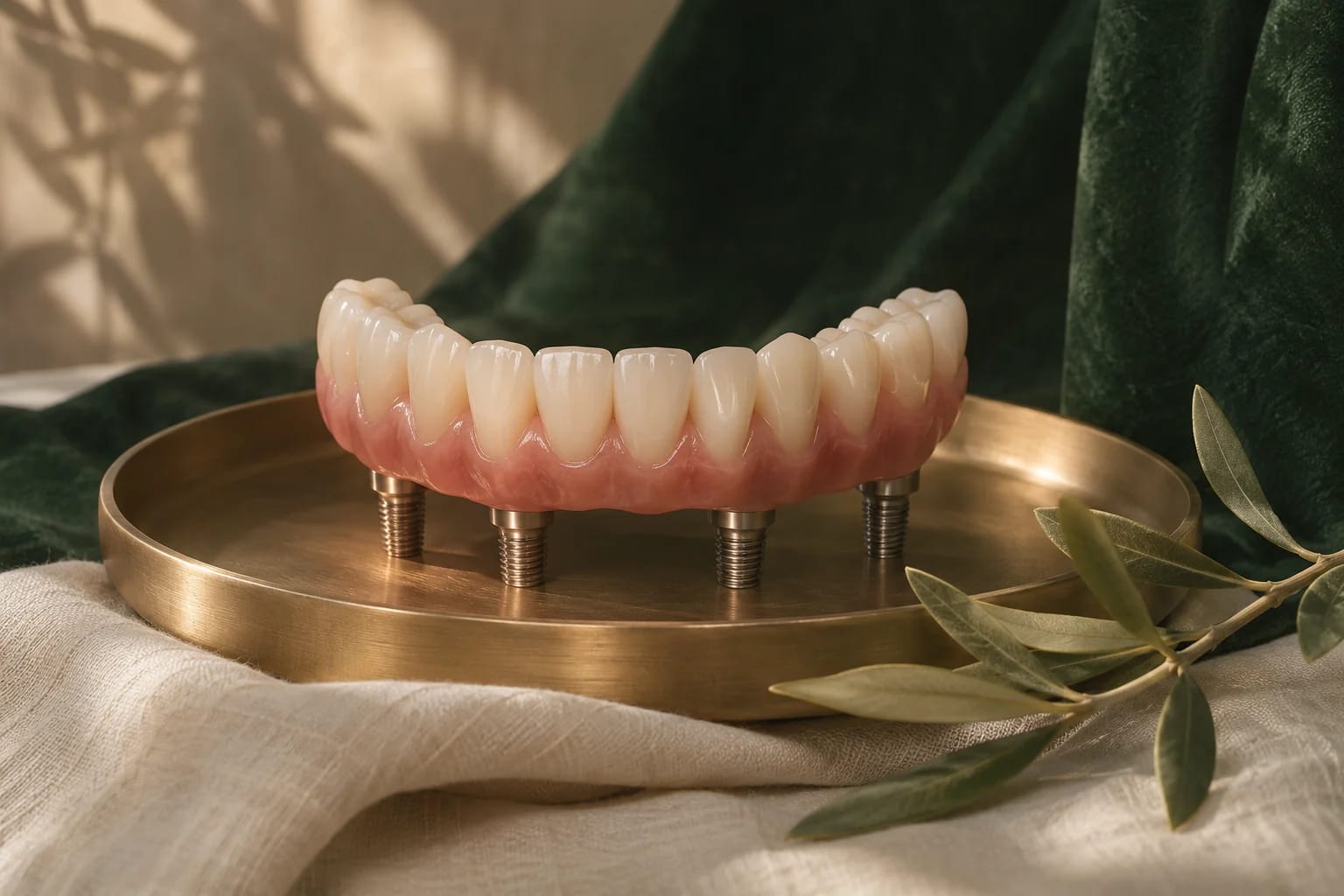
Sometimes the answer is a combination – for several missing teeth, for example, a bridge supported by implants, so not every tooth needs its own implant.
How we decide together
At your first consultation we examine your mouth, look closely at the neighbouring teeth and gums, and take a 3D scan if needed. We also ask about your general health and any medication you take.
We then explain which options are realistic in your case, with the advantages and drawbacks of each. After the examination you receive a written, itemised treatment plan to take home and think over. There is no need to decide on the spot.
Would you like advice for your situation?
If you would like to know which option suits you, request a consultation and we will talk it through with you.
Read more: Dental implants · Crowns and bridges · Oral surgery