
All-on-4 and All-on-6: a fixed set of teeth on implants
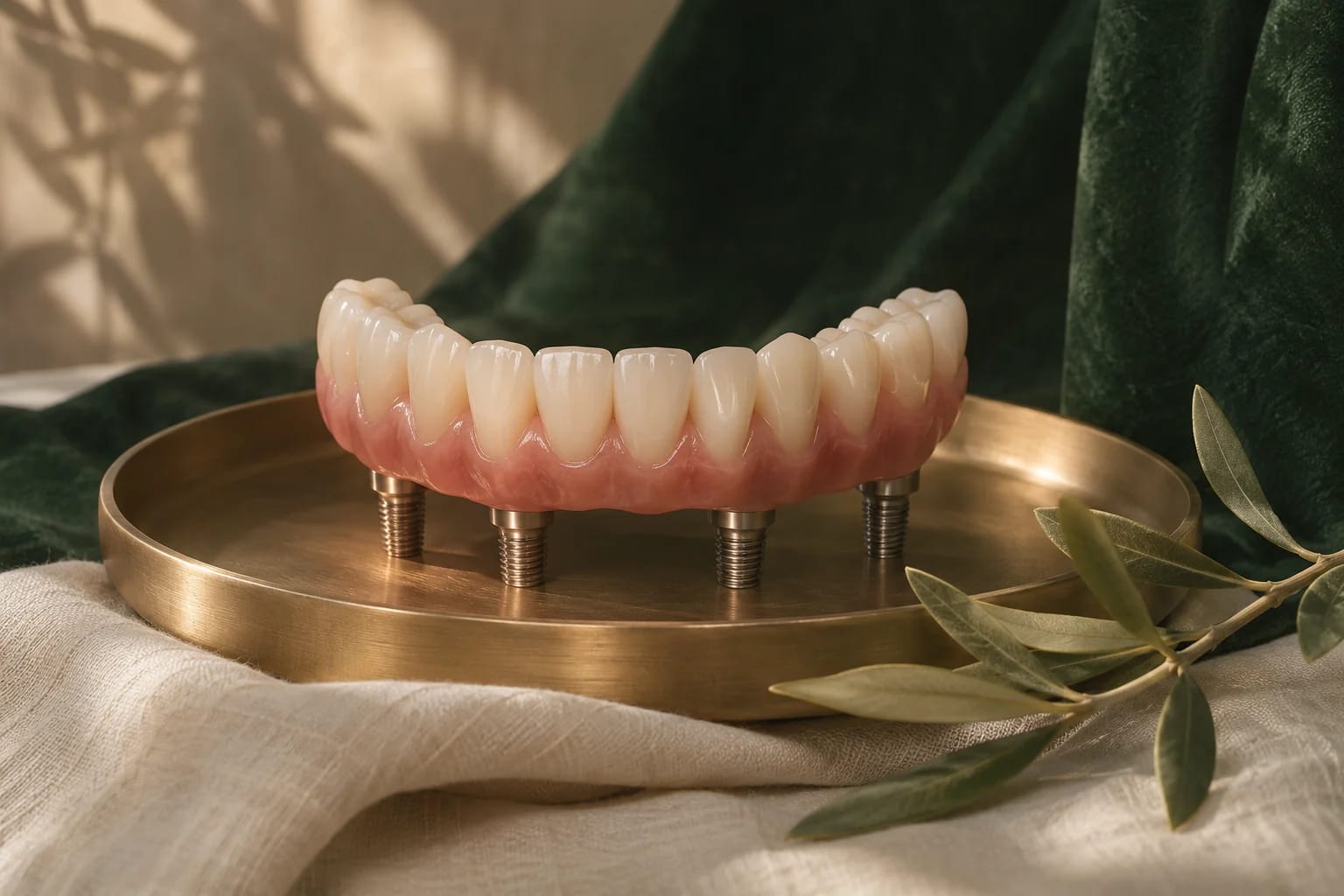
If all your teeth are missing, four or six implants may be enough to carry a full, fixed set of teeth. You do not take it out, it does not move, and it does not cover the roof of your mouth.
When is it a good choice?
- All the teeth are missing in one or both jaws.
- Your remaining teeth cannot be saved and you want a fixed solution.
- Your removable denture moves, rubs your gums or bothers you when you eat and speak.
- It matters to you that you do not have to take your teeth out every evening.
What are All-on-4 and All-on-6?
All-on-4 and All-on-6 are treatment methods in which the teeth of a whole jaw are replaced with a single fixed set, carried by four or six implants. There is no need for a separate implant for every missing tooth, yet you still get a stable, fixed result.
With All-on-4, the back implants are often placed at an angle. This makes better use of the stronger areas of bone, and a larger bone graft can often be avoided. All-on-6 gives more support, which can be an advantage in some cases.
When is it a good choice?
Consider this option if you have no natural teeth left in one or both jaws, or if your remaining teeth cannot be saved. Many people come to us because their removable denture moves, feels uncomfortable or bothers them when eating and speaking.
Whether the method suits you can only be said after a thorough examination. We use a 3D CBCT scan made on site, and we also take your general health into account, for example diabetes, smoking or the medicines you take.
How does the treatment work?
Dr Olivér Muskát carries out the procedure under local anaesthetic. If you still have teeth that cannot be saved, we usually remove them and place the implants at the same appointment.
If the bone allows, you can get temporary fixed teeth fairly soon, so you do not have to be without teeth while you heal. The final set is made after healing. We carefully match its shape, colour and bite to your face and the way you chew.
What to expect afterwards
In the first days there may be swelling and tenderness, which gradually settle. In the early period we recommend softer food so the implants can heal undisturbed. You receive detailed written advice, and you can call us at any time with questions.
The aim: to be able to eat and speak with confidence again, without constantly thinking about your teeth. It does take time, though: your mouth and chewing muscles need to get used to the new teeth.
Aftercare
You do not take the fixed teeth out, so they must be cleaned carefully in your mouth. We show you the right tools, such as special brushes or a water flosser.
Regular check-ups are especially important here. At the check-up we examine the implants and gums, and if needed we remove the teeth for a thorough clean. This way your new teeth can serve you reliably for a long time.
Treatment steps
Assessment and 3D CBCT
We examine your mouth and general health, then take a 3D scan on site. It shows whether four or six implants suit your case better.
Planning
We plan the position of the implants and the shape of the teeth. You receive the treatment plan in writing, with the steps and timing.
Implants and temporary teeth
Removing teeth that cannot be saved and placing the implants is done under local anaesthetic. If the bone allows, you can get temporary fixed teeth quite soon.
Final teeth
After healing, the final set is made and fixed to the implants with screws. We match it to your face and your bite.
Frequently asked questions
What is the difference between All-on-4 and All-on-6?
The principle is the same: a full set of teeth is fixed on implants. The difference is the number of implants. Whether four or six is better depends on the amount and quality of your bone and on the load – we decide this based on the 3D scan.
Can I take the teeth out?
No. The dentist fixes them in place, and only the dentist can remove them, for example for a thorough professional clean. You clean them in your mouth, much like your own teeth.
Will I need a bone graft?
One aim of the All-on method is to make the best use of the bone you have, so a larger bone graft can often be avoided. The 3D scan shows whether you need one.
How many visits should I expect?
We write the exact number in your treatment plan. For patients travelling a long way, we plan the steps so that – where medically possible – fewer trips are needed.
Let's talk it through in person
Book a consultation: we examine you, explain your options and give you a written treatment plan.
Related treatments

Dental implants
Replace one tooth or a whole set, without grinding down the healthy teeth next to the gap.
Learn more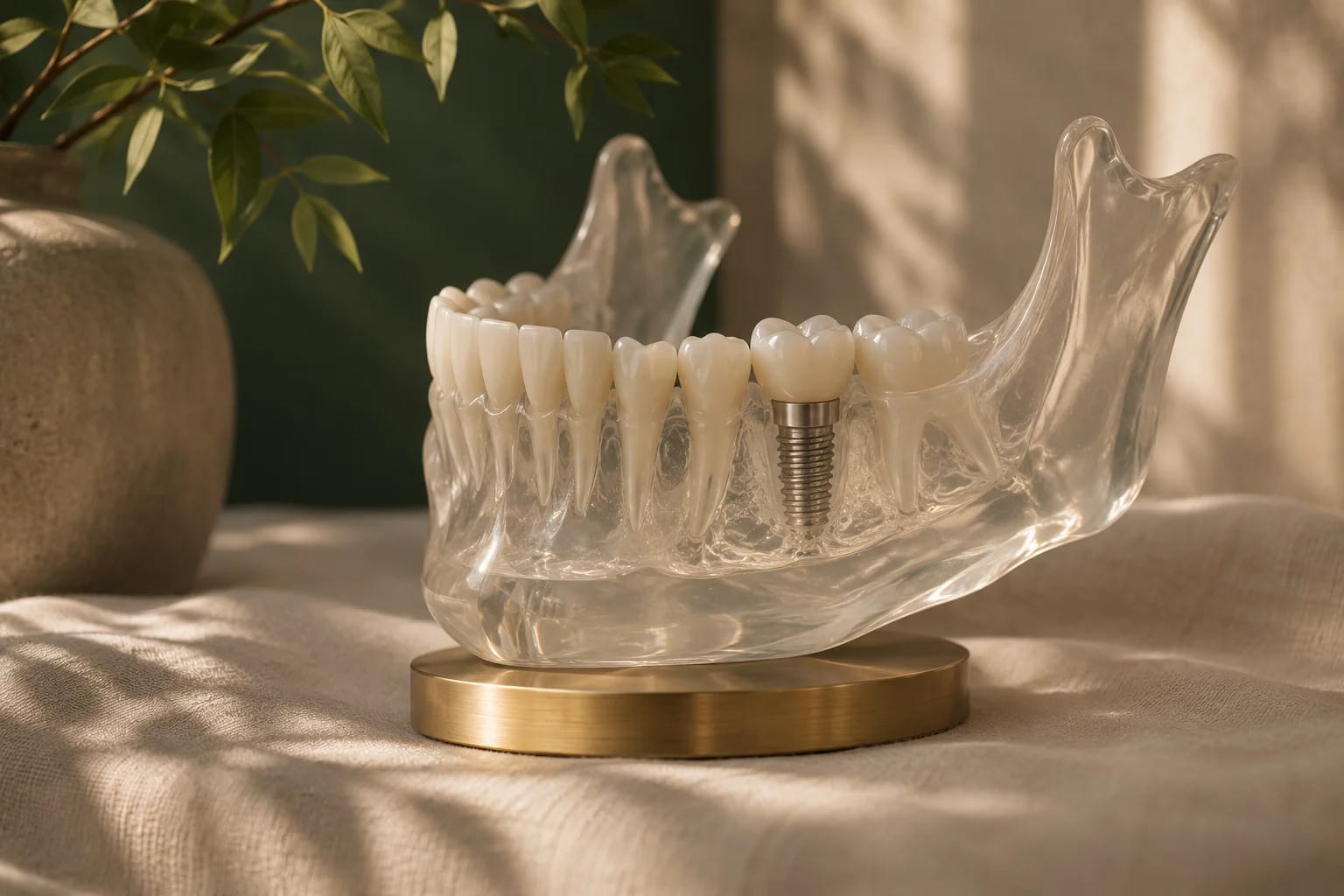
Oral surgery
Extractions, wisdom teeth, bone grafting and sinus lift, planned with a 3D scan.
Learn more
Fillings, inlays, onlays
Tooth-coloured fillings and ceramic inlays and onlays to repair decayed or damaged teeth.
Learn more