
Dental implants: a new root for a missing tooth
An implant replaces the root of a missing tooth and carries a crown, bridge or denture on top. It works for anything from a single tooth to a full set.

When is it a good choice?
- You are missing one or more teeth and would like a fixed replacement that you do not take out.
- You do not want healthy neighbouring teeth ground down to make room for a bridge.
- Your removable denture moves around and you are looking for something more secure.
- Your general health and jawbone allow the procedure – the examination will tell us.
What is a dental implant?
An implant is a small screw-shaped part placed in the jawbone where the root of the missing tooth used to be. It is made of a tissue-friendly material, and during healing the bone bonds closely to it. The visible part – a crown, bridge or denture – is fitted onto this solid base later.
An implant can replace a single tooth just as well as hold several teeth or a full denture in place. A big advantage is that healthy neighbouring teeth do not need to be ground down, and chewing forces go into the bone just as they did with your own tooth.
Why does the 3D scan matter?
To place an implant safely, we need to know the exact height and width of your jawbone and what lies around it, such as nerves and the sinus. We take the 3D CBCT scan at our practice, so you do not have to go elsewhere for an X-ray.
Based on the scan, we plan the position and size of the implant. If there is not enough bone, this is where it shows – and we talk through the options before the treatment begins.
How is the implant placed?
Dr Olivér Muskát carries out the procedure under local anaesthetic. In most cases it is one short, well-planned appointment. Beforehand we explain what to expect and what to do on the day.
After placement, the implant needs time to heal. You do not have to go without a tooth in the meantime: where the situation allows, we make a temporary replacement. We check the healing at a follow-up visit, and then your final, custom-made restoration is made.
Who is it suitable for?
Most adults whose jawbone has finished growing and whose general health allows it can have an implant. Untreated diabetes, heavy smoking or certain medicines can make healing harder. We discuss these honestly at the consultation and, if needed, suggest a different solution.
What to expect afterwards
In the first days some mild swelling and tenderness are normal. Cooling, soft food and following the instructions you receive will help. Avoid smoking in the early period, as it slows healing.
If you notice anything unusual, please call us. We would rather you ask once too often than once too little.
How to look after your implant
A tooth on an implant cannot decay, but the gum and bone around it can become inflamed if plaque builds up. So it needs the same careful cleaning as your own teeth:
- brush twice a day and clean between the teeth with interdental brushes or floss;
- go for regular check-ups and hygiene visits, as your dentist recommends;
- stop smoking or cut down, as it is one of the biggest risk factors.
At regular check-ups we notice in good time if anything changes. That way the implant and its restoration can serve you for many years.
Treatment steps
Consultation and 3D scan
We examine your mouth and take a 3D CBCT scan of your jaw here at the practice. It shows where an implant fits safely, and what size it should be.
Written treatment plan
We explain which options are possible, how many steps the treatment involves and how long it takes. You also receive the plan in writing, itemised.
Placing the implant
The procedure is done under local anaesthetic, and you will not feel pain. If needed, you get a temporary replacement while the area heals.
Healing and bonding with the bone
Over a few months the bone grows firmly onto the surface of the implant. We check the healing at follow-up visits.
The final restoration
An abutment is fitted, followed by a custom-made crown, bridge or denture, matched to your own teeth in colour and shape.
Frequently asked questions
Does getting an implant hurt?
The procedure is done under local anaesthetic, so the surgery itself does not hurt. For a few days afterwards there may be some tenderness and swelling, which painkillers and cooling usually ease well. We give you detailed advice for the journey home.
How long does the whole treatment take?
From placing the implant to the final restoration it usually takes a few months, because the bone needs time to heal. We write down the exact timing in your treatment plan, after the 3D scan and examination.
What if I do not have enough bone?
This is common, and in many cases it can be solved with a bone graft or a sinus lift. We do these procedures here too – you can read more on our oral surgery page.
How long does an implant last?
It depends a great deal on oral hygiene, smoking, general health and regular check-ups. With good care it is a long-term solution, which is why we keep following your implant after it is placed.
Let's talk it through in person
Book a consultation: we examine you, explain your options and give you a written treatment plan.
Related treatments
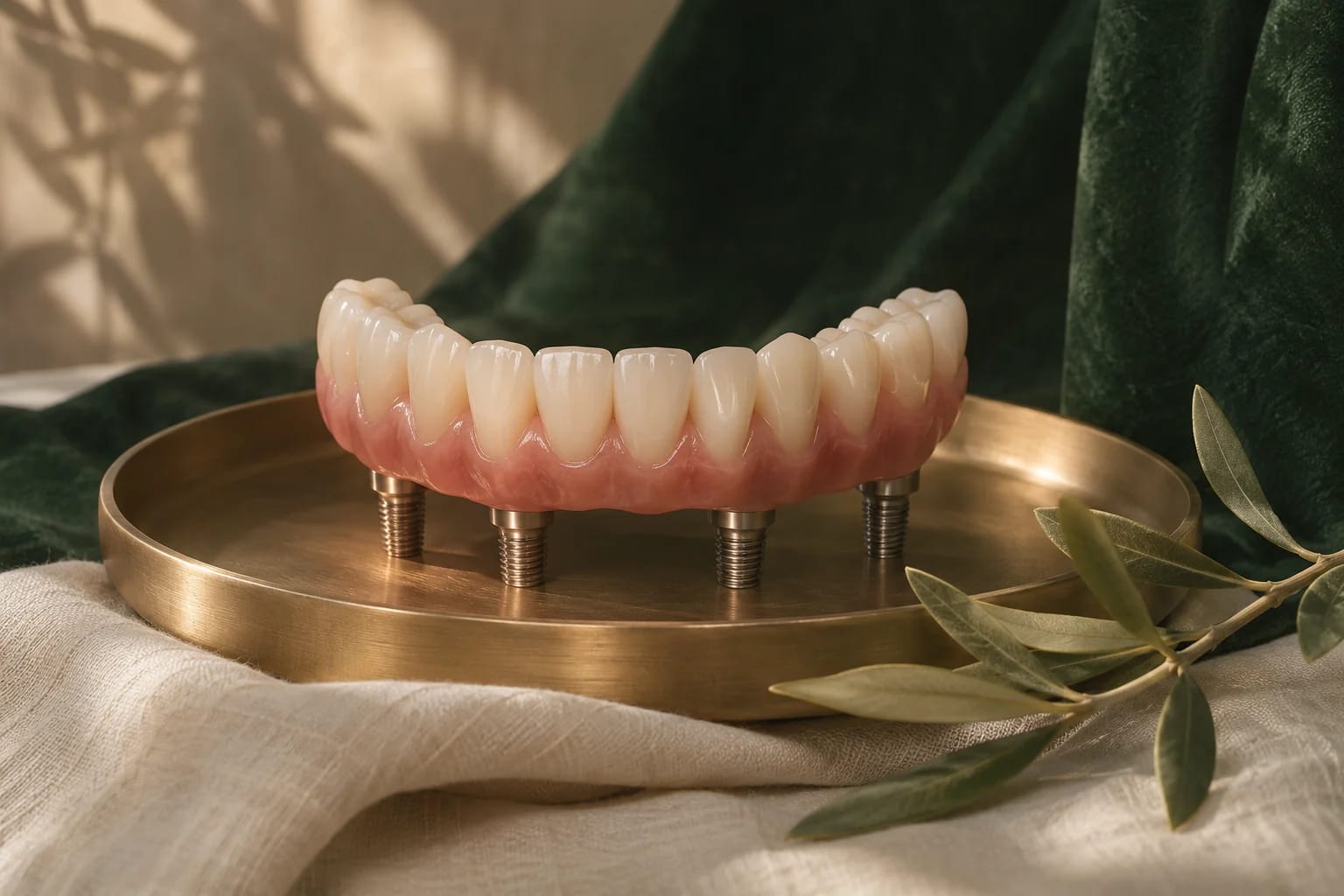
All-on-4 / All-on-6
A fixed full set of teeth on four or six implants, when all teeth are missing.
Learn more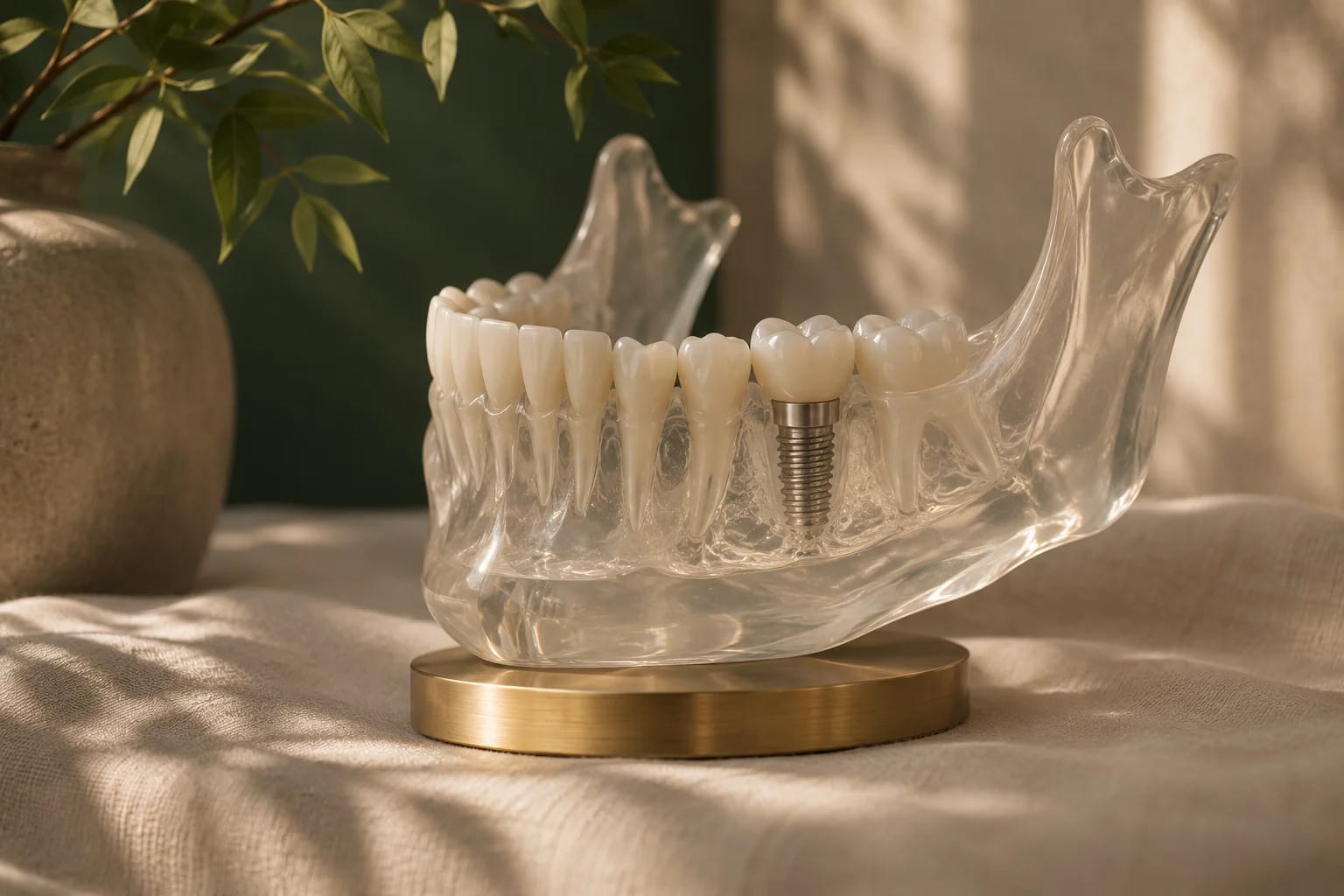
Oral surgery
Extractions, wisdom teeth, bone grafting and sinus lift, planned with a 3D scan.
Learn more
Fillings, inlays, onlays
Tooth-coloured fillings and ceramic inlays and onlays to repair decayed or damaged teeth.
Learn more