
Crowns and bridges: strong, natural-looking restorations
A crown protects and rebuilds a damaged tooth, while a bridge replaces a missing tooth by resting on the teeth beside it. We make both in zirconia and in porcelain fused to metal.
When is it a good choice?
- A tooth is badly decayed, broken or weakened by a large filling.
- You want to protect a root-treated tooth for the long term.
- One or two teeth are missing and you would like a fixed replacement.
- You want to restore discoloured or misshapen teeth so they look good.
- You need a restoration to sit on an implant.
What are a crown and a bridge?
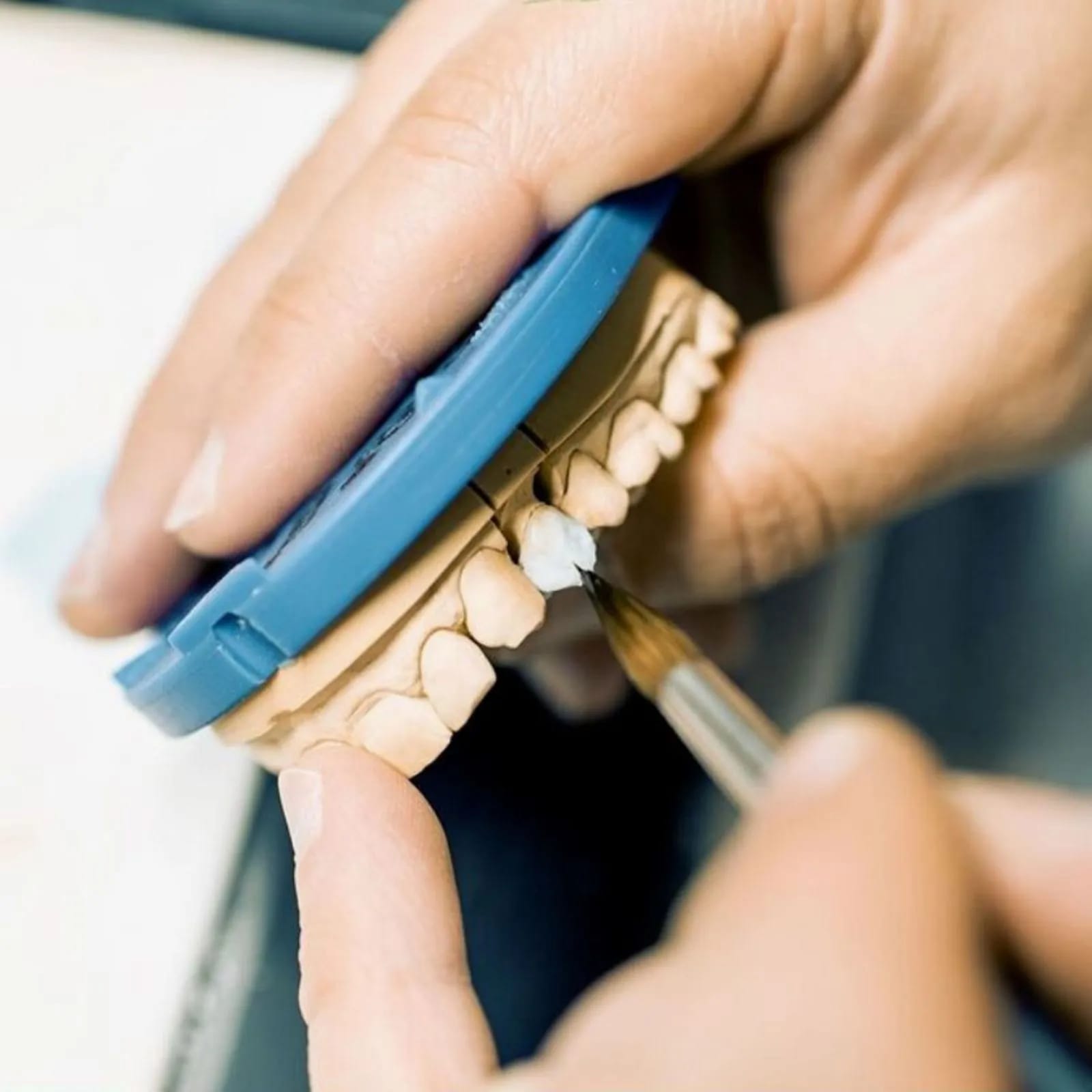
A crown is a cap that fully surrounds the visible part of a tooth. We recommend it when a tooth is so damaged or weak that a filling could no longer protect it for the long term. The crown restores the shape of the tooth and guards against fracture.
A bridge replaces one or more missing teeth. It rests on the teeth at either end of the gap, or on implants, and crowns are placed on these, with the replacement tooth spanning between them like a bridge. A bridge is fixed – you do not take it out.
Zirconia or porcelain fused to metal?
A zirconia crown is made of a metal-free, very strong ceramic. It lets light through like a natural tooth, and no dark metal line shows at the gum edge. So we mainly recommend it for teeth that show when you smile, but it also suits back teeth.
A porcelain-fused-to-metal crown is made of ceramic fired onto a metal framework. It is a long-used, strong and reliable option, especially for back teeth that take heavy chewing forces.
Which one suits you depends on the position of the tooth, your bite, the shade of the neighbouring teeth and your own wishes. At the consultation we explain both options.
How is it made?
Crowns and bridges are made by Dr Babett Kenyeres, whose main fields are prosthetics and aesthetic dentistry. At the first appointment we prepare the tooth under local anaesthetic: we remove a thin layer all around it and shape a precise margin so that the crown fits tightly against the gum.
Then we take an impression, and you wear a temporary crown while the final restoration is made. The dental technician works from the impression. At the try-in we check the fit, the bite and the shade, and we fix it permanently only when everything is right.
What to expect afterwards
In the first days the tooth may be slightly sensitive to cold and heat, which usually passes quickly. Your tongue and bite also get used to the new crown within a few days. If the bite feels high, let us know and we will adjust it gently at the follow-up.
Aftercare
A crown cannot decay, but the edge of the tooth it fits onto can. So a crowned tooth needs cleaning just like the others:
- brush twice a day and clean between your teeth too;
- under bridges, clean with a floss threader or interdental brushes;
- go for regular check-ups and hygiene visits.
If you grind your teeth at night, tell us. A night guard can help protect the crowns and your own teeth.
Treatment steps
Examination and planning
We examine your teeth, take an X-ray and discuss which material suits your case best.
Preparing the tooth
Under local anaesthetic, and without pain, we shape the tooth and take an accurate impression. Until the crown is ready you wear a temporary one.
Lab work and try-in
The dental technician makes the crown or bridge from the impression. At the try-in we check the fit, the bite and the shade.
Final fitting
When everything is right, the restoration is cemented permanently. We show you how to clean it.
Frequently asked questions
Zirconia or porcelain fused to metal – which should I choose?
Zirconia is metal-free and lets light through much like a natural tooth, which makes it a particularly good choice for visible teeth. Porcelain fused to metal is a long-established, strong option. At the consultation we decide together, based on your teeth, your bite and your wishes.
Will it show that I have a crown?
We match the shade and shape of the crown to your own teeth so that it blends in naturally. We choose the shade in daylight, comparing it with the neighbouring teeth.
Why does the tooth have to be ground down?
A crown needs space so that it is thick enough, strong and fits the gum line accurately. We only remove as much as is needed for a lasting result.
What is the difference between a bridge and an implant?
A bridge rests on the neighbouring teeth, so they have to be prepared. An implant replaces the missing tooth on its own. Each has its advantages; at the consultation we explain what speaks for each in your case.
Let's talk it through in person
Book a consultation: we examine you, explain your options and give you a written treatment plan.
Related treatments
Veneers
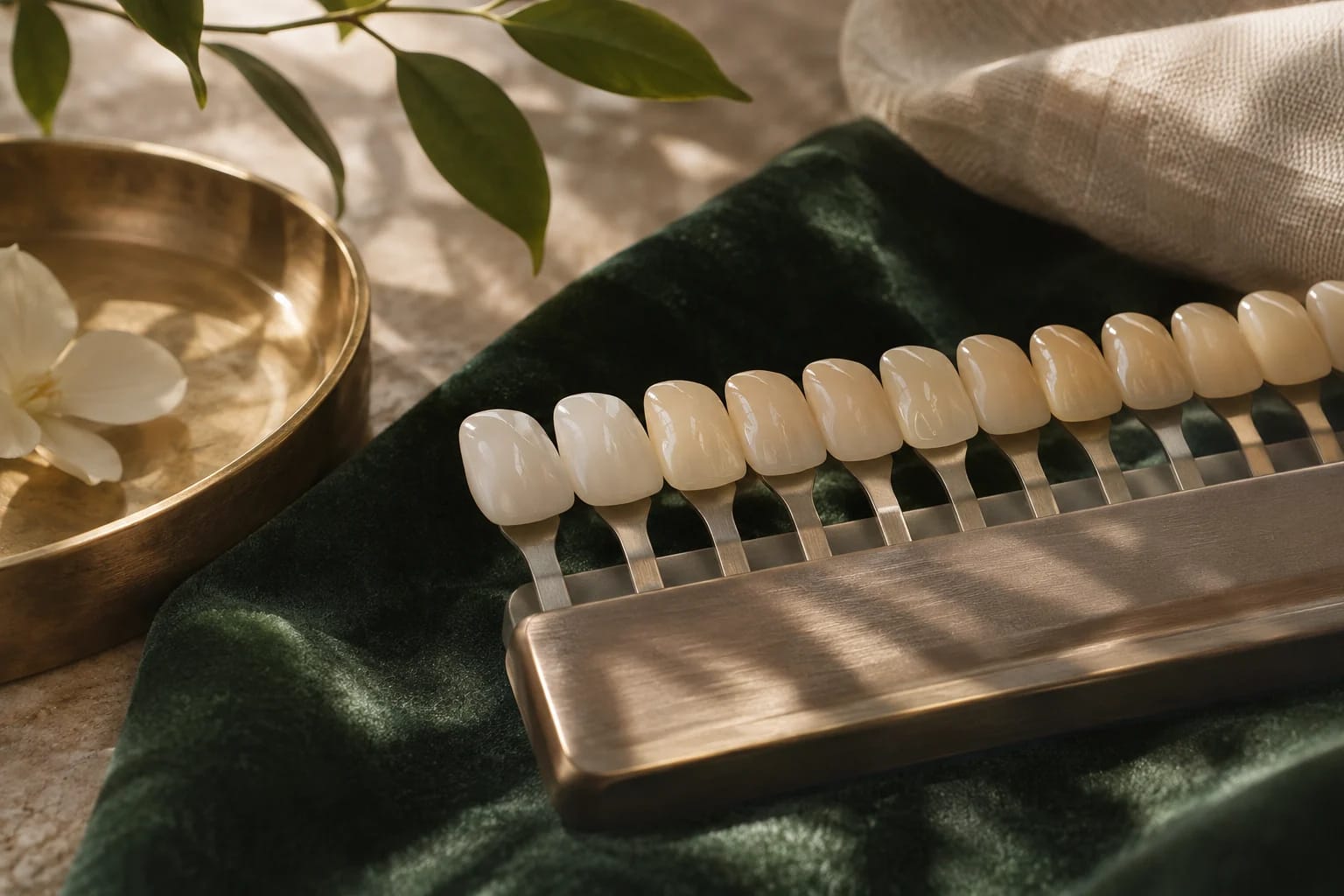
Porcelain or direct composite veneers for discoloured, chipped or uneven front teeth.
Learn more
Dentures
Full and partial dentures, concealed-attachment or implant-retained dentures.
Learn more
Fillings, inlays, onlays
Tooth-coloured fillings and ceramic inlays and onlays to repair decayed or damaged teeth.
Learn more