
Veneers: a lovelier smile, with gentle treatment
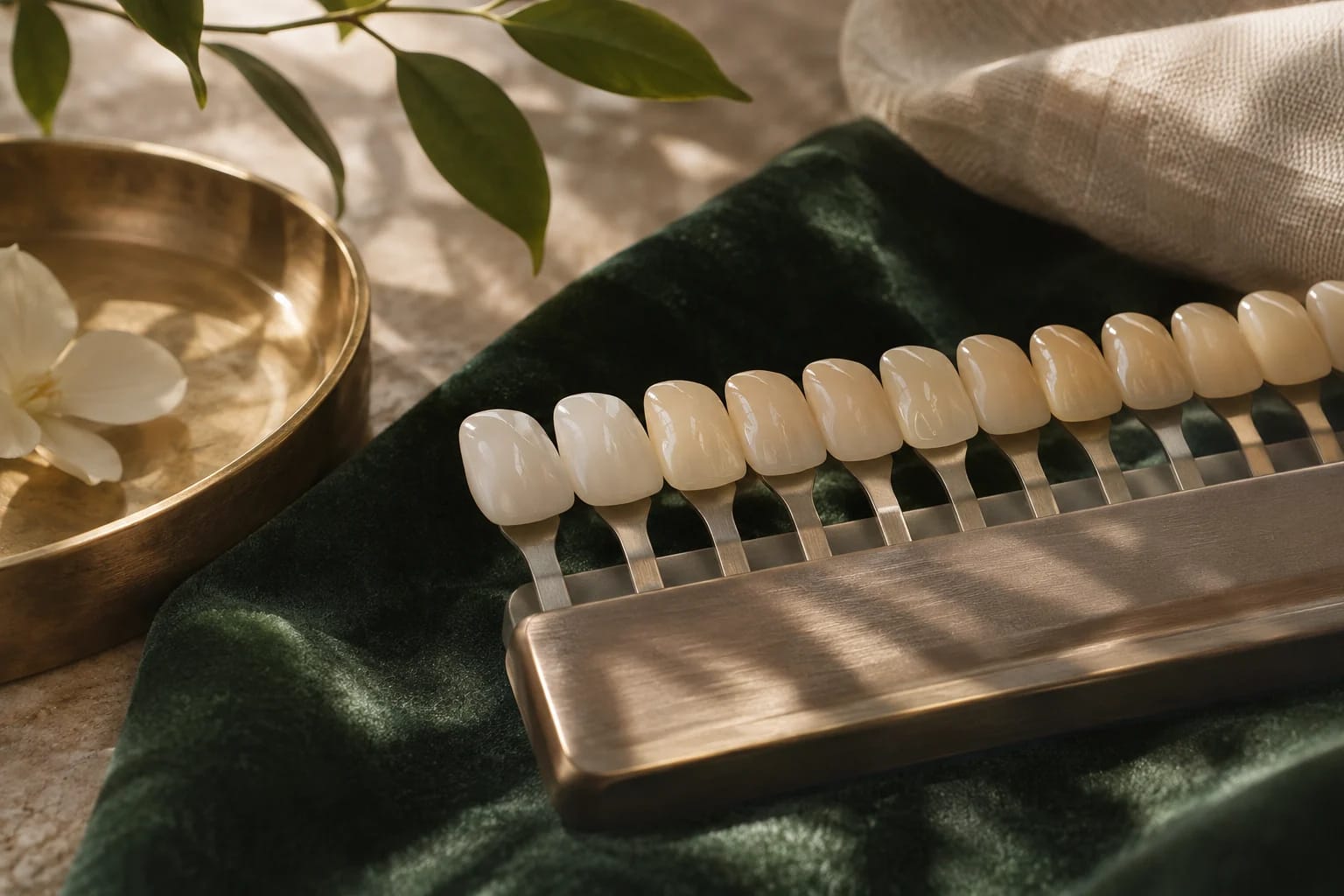
A veneer is a thin, tooth-coloured layer that covers the front of a tooth. For discoloured, chipped or slightly uneven teeth, it brings back a harmonious smile.
When is it a good choice?
- Your front teeth are discoloured and whitening does not help.
- A tooth is chipped or smaller than the others.
- You have a small gap between your teeth that you would like to close.
- Your teeth are uneven in shape but otherwise healthy.
What is a veneer?
A veneer is a thin, tooth-coloured layer fixed to the visible front surface of a tooth. Unlike a crown it does not cover the whole tooth, so less of the tooth needs to be sacrificed.
We use veneers mainly on the front teeth that show when you smile. They can change the colour, shape and length of a tooth, and close small gaps.
Porcelain veneers
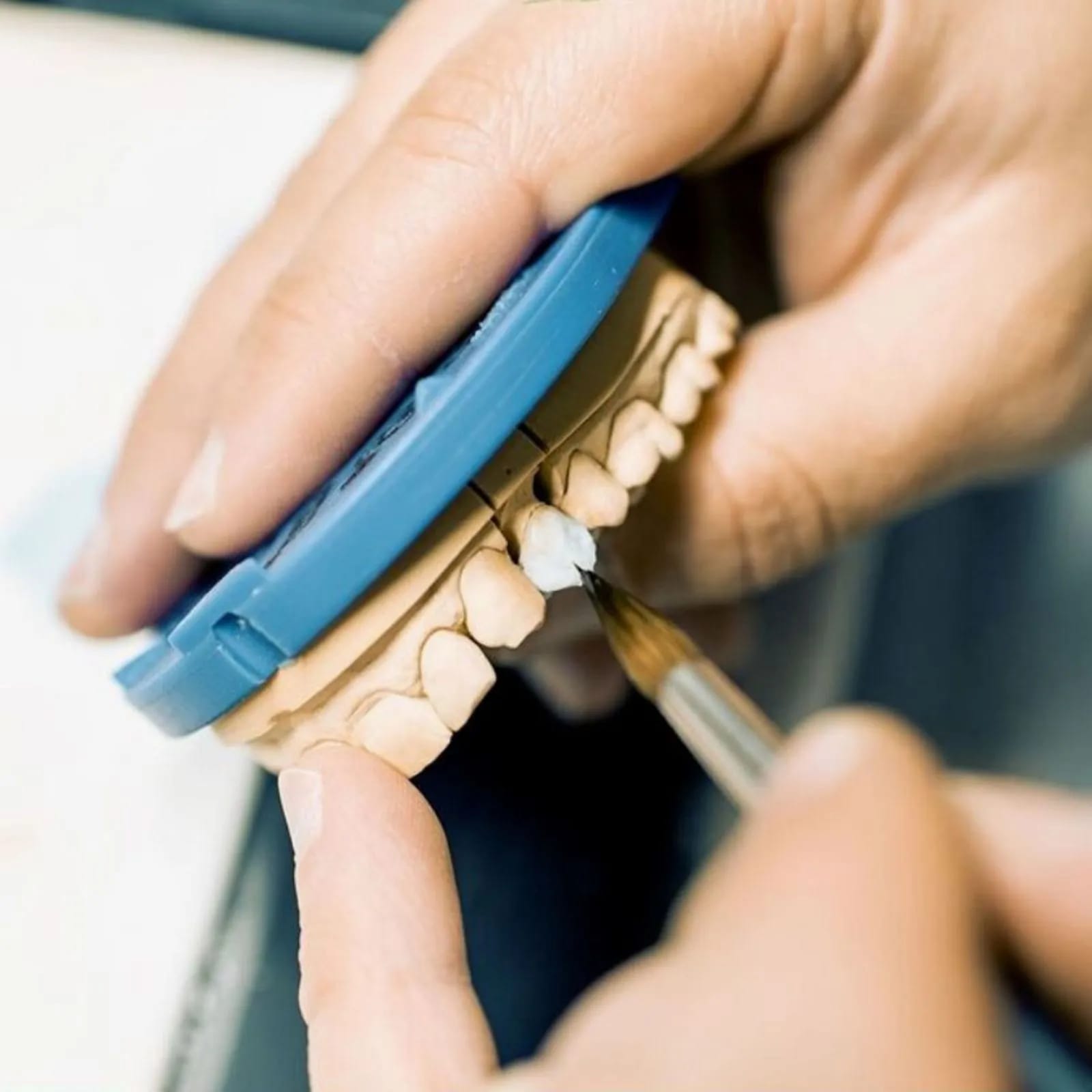
A porcelain veneer is made individually in a dental laboratory. At the first appointment we remove a thin layer from the front of the tooth and take an impression. At a following appointment, after careful checking, we bond the finished veneer in place.
The colour of porcelain lasts, its surface is very smooth, and it reflects light much like natural enamel. That makes it a good choice if you want a long-lasting, good-looking result.
Direct composite veneers
A direct composite veneer is built in layers from tooth-coloured filling material, directly on the tooth. No laboratory is needed, so it can be finished in a single appointment. Often the tooth needs no grinding at all, or only a very little.
Composite can be repaired or added to later. On the other hand, it can stain over time, so it needs polishing now and then at check-ups. It can be a good choice if you want a smaller change, or a gentler and quicker solution.
When is a veneer not the right solution?
If a tooth is badly damaged or has a large filling, a veneer would not give enough protection. A crown may then be the better choice. And if the position of the teeth differs significantly, orthodontic treatment is sometimes the gentler route. After the examination we tell you honestly which solution we think suits you best.
How does it work?
Veneers are made by Dr Babett Kenyeres, whose main fields are prosthetics and aesthetic dentistry. The first step is always a conversation: what bothers you about your smile, and what would you like to achieve.
Then we examine your teeth and gums. A veneer can only go on a healthy base, so if there is decay or gum inflammation, we treat that first. Together we choose the shape and shade so that the result looks natural.
What to expect afterwards, and how to care for them
You will get used to veneers within a few days. In the first days your teeth may be slightly sensitive. Clean veneered teeth like the others: by brushing and cleaning between the teeth.
A few tips to keep your veneers looking good for a long time:
- do not bite on hard objects (pens, nails, nut shells);
- if you grind your teeth at night, ask us about a night guard;
- with composite veneers, coffee, tea and smoking may mean more frequent polishing;
- go for regular check-ups and hygiene visits.
Treatment steps
Consultation
We talk about what you would like to change about your smile and check whether your teeth are suitable. We explain whether porcelain or composite veneers suit you better.
Planning
We choose the shape and shade. We plan so that the veneers suit your face and your other teeth, and do not stand out.
Making the veneers
A composite veneer is built directly on the tooth in one appointment. A porcelain veneer is made in a dental laboratory, so it takes at least two appointments.
Check
At the follow-up we check how the veneers fit and your bite, and fine-tune them if needed.
Frequently asked questions
How much of the tooth has to be ground down?
For porcelain veneers, usually only a thin layer from the front of the tooth. For composite veneers, often none at all or only a minimal amount. We give you the exact answer after the examination.
Porcelain or composite veneer – what is the difference?
A porcelain veneer is made in a laboratory, its shade lasts and its surface is very smooth. A composite veneer is made in one sitting, directly on the tooth, and can be repaired later, but it can stain over time, so it needs polishing now and then.
Can anyone have veneers?
Not everyone. If the teeth are badly decayed, the gums are inflamed, or someone grinds their teeth heavily, these need to be dealt with first, or another solution may be better. We clarify this at the examination.
Let's talk it through in person
Book a consultation: we examine you, explain your options and give you a written treatment plan.
Related treatments
Crowns and bridges
Zirconia or porcelain-fused-to-metal crowns and bridges to restore damaged or missing teeth.
Learn more
Dentures
Full and partial dentures, concealed-attachment or implant-retained dentures.
Learn more
Fillings, inlays, onlays
Tooth-coloured fillings and ceramic inlays and onlays to repair decayed or damaged teeth.
Learn more