
Dentures: a comfortable solution for every situation
A removable denture replaces missing teeth when a fixed solution is not possible, or not what you are looking for. There are many options, from a full denture to one retained on implants.
When is it a good choice?
- Several teeth, or all the teeth in one jaw, are missing.
- Your old denture is worn, fits badly or rubs your gums.
- You do not want the clasps of a denture to show when you smile.
- You would like a more stable denture, but are not planning a fully fixed solution.
What kinds of removable dentures are there?
A removable denture is one that you can take out for cleaning. It is a good choice if several teeth are missing, if a fixed restoration is not possible in your case, or if you want a simpler, easier-to-manage solution. After the examination we explain the options in detail.
Full and partial dentures
A full denture is made when there are no natural teeth left in a jaw. It holds in place by suction and by the shape of the gum. The upper denture is usually more stable, while the lower one moves more easily because of the tongue.
A partial denture suits you if you still have some of your own teeth. We fix it to the remaining teeth with clasps or other elements, so the denture moves less and the chewing forces are spread better.
Concealed-attachment dentures
A concealed-attachment restoration has a fixed part and a removable part. Crowns go on the remaining natural teeth, and small, invisible fixing elements are built into them. The removable part connects to these.
The advantage is that the denture is stable and no metal clasps show when you smile. We plan and make these restorations with great care.
Implant-retained (bar) dentures
If a traditional denture does not hold well enough, a few implants can help a great deal. We fix a metal bar between the implants, or place other attachments, and the denture snaps onto these.
The denture then does not move when you eat and speak, but you can still take it out to clean it. Often it does not need to cover the roof of your mouth completely, which is more comfortable, and you taste food better. Dr Olivér Muskát places the implants, and Dr Babett Kenyeres makes the denture.
Which one suits you?
The choice depends on how many of your own teeth remain, what condition they are in, how much bone there is, and what matters to you: simplicity, stability or appearance. After the examination we set the options side by side and decide together.
What to expect, and how to care for it
A new denture takes time. In the first weeks speaking and chewing may feel unusual, and small pressure points can appear. We adjust these gently at the follow-up – so it is important to tell us if something rubs.
To look after your denture:
- clean it daily with a denture brush, over running water;
- usually take it out at night and keep it clean;
- do not use hot water, as the denture can warp;
- the gum changes over time, so a denture sometimes needs relining or adjusting – we check this at your follow-up too.
Treatment steps
Examination and discussion
We look at your remaining teeth, your gums and the condition of the bone, and explain which solutions are possible.
Impression and bite
We take an accurate impression and record your bite. The dental technician then makes the denture from these.
Try-ins
We check the shape, shade and position of the teeth at the try-in, and the final denture is made only once you have approved it.
Fitting and adjustment
We hand over the denture and show you how to use and clean it. In the first weeks we adjust any pressure points at follow-up visits.
Frequently asked questions
How long does it take to get used to a new denture?
Usually a few weeks. At first speaking and chewing may feel unusual, and small pressure points can appear. We adjust these at the follow-up, so it is important to tell us if something rubs.
What does concealed attachment mean?
The removable part is held not by visible clasps but by hidden fixing elements built into crowns on your own teeth. This makes the denture more stable, and no metal shows when you smile.
What is a bar denture?
A metal bar is fixed between two or more implants, and the removable denture snaps onto it. The denture does not move, but you can still take it out to clean it.
Do I have to take it out at night?
It is usually recommended to take a removable denture out at night, so the gums can rest and you can clean the denture thoroughly. We give you exact advice adapted to your own restoration.
Let's talk it through in person
Book a consultation: we examine you, explain your options and give you a written treatment plan.
Related treatments
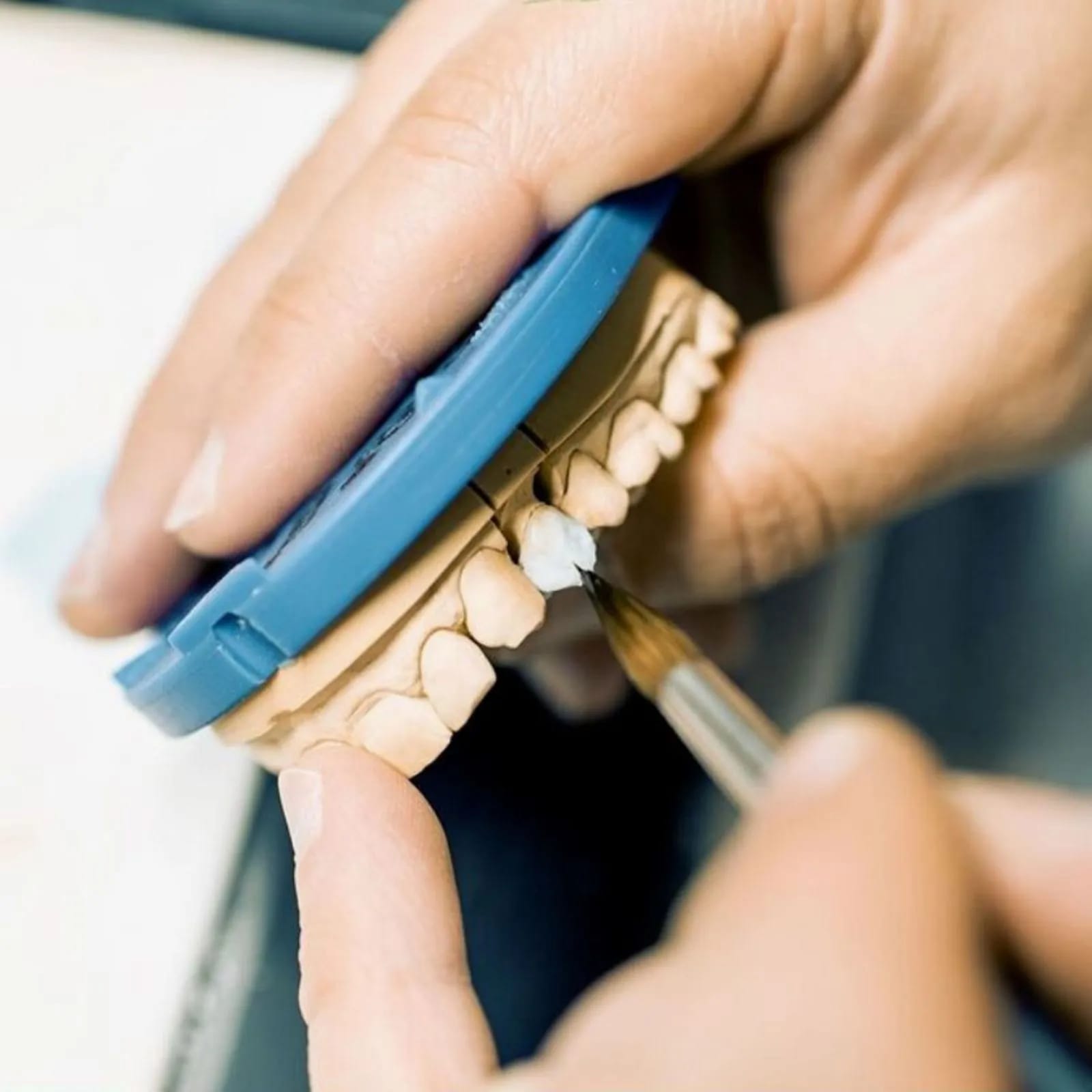
Crowns and bridges
Zirconia or porcelain-fused-to-metal crowns and bridges to restore damaged or missing teeth.
Learn more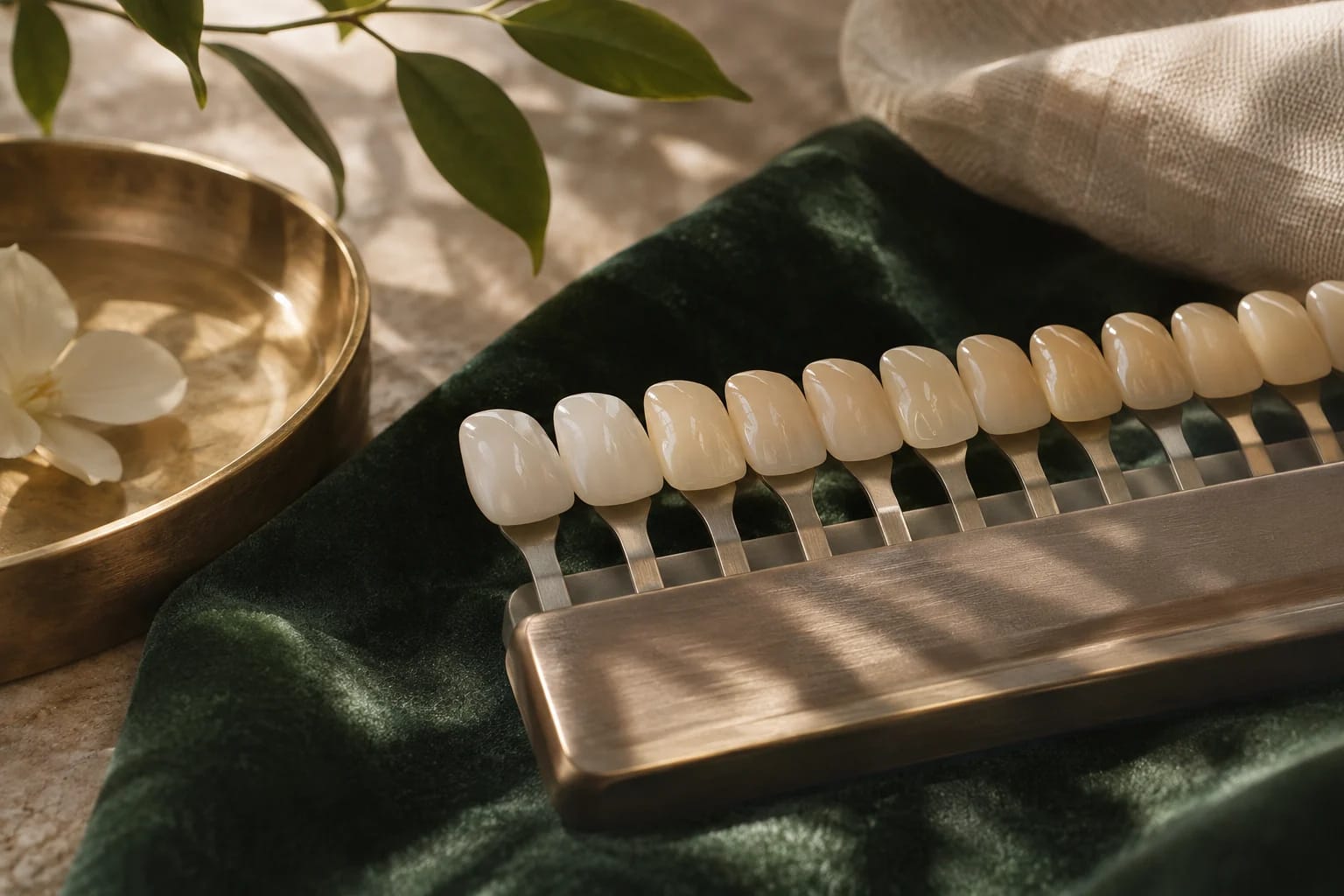
Veneers
Porcelain or direct composite veneers for discoloured, chipped or uneven front teeth.
Learn more
Fillings, inlays, onlays
Tooth-coloured fillings and ceramic inlays and onlays to repair decayed or damaged teeth.
Learn more