
Root canal treatment: saving your tooth while we can
When the nerve of a tooth becomes inflamed or dies, root canal treatment can often save the tooth. The treatment is done under local anaesthetic, without pain.

When is it a good choice?
- A tooth hurts badly with a throbbing pain, or heat causes pain that lingers.
- A swelling or small gum boil has appeared next to a tooth.
- A tooth has darkened because its nerve has died.
- An X-ray shows inflammation around the tip of the root, even if you have no symptoms.
When is root canal treatment needed?
Inside the tooth, in the root canals, is the pulp – the nerve and blood vessels. Deep decay, an injury or an old, large filling can cause the pulp to become inflamed. This can cause strong, throbbing pain, but sometimes a tooth dies quietly, with no symptoms.
The inflammation can also spread to the bone around the tip of the root. Then you may notice swelling, a gum boil or sensitivity when chewing. The aim of root canal treatment is to remove the source of the infection and save the tooth.
How does the treatment work?
The treatment is done under local anaesthetic, without pain. We open the tooth and, with fine instruments, remove the diseased or dead tissue from the root canals. We then widen the canals and rinse them thoroughly with a disinfectant solution.
If the inflammation is significant, we place a medicated dressing in the canals for a few days and close the tooth temporarily. When the tooth has settled, we seal the canals airtight with a permanent root filling. We check the position of the filling with an X-ray.
In a more complex case, for example when the canals lie in an unusual position, the 3D CBCT scan made at the practice helps with precise planning.
How long does it take?
The length of the treatment depends on how many root canals the tooth has and how severe the inflammation is. A front tooth usually has one canal, a molar may have three or four. In a simpler case one or two appointments are enough, in a more complex case several visits are needed.
After the first examination we tell you roughly how many appointments to expect and what happens at each one. If you are travelling from far away, we take that into account when planning your appointments.
Who carries out the treatment?
Root canal treatment is carried out by both Dr Olivér Muskát and Dr Babett Kenyeres. For the final restoration of a root-treated tooth – a filling, onlay or crown – the prosthetic planning is the field of Dr Babett Kenyeres.
What to expect afterwards
After the treatment the tooth may be sensitive for a few days, especially when chewing. This usually passes gradually, and a painkiller helps if needed. While the temporary filling is in place, do not chew hard food on the treated side.
If you notice increasing pain, swelling or a fever, please call us.
Protecting and caring for a root-treated tooth
A root-treated tooth cannot feel, but it can still decay, and it becomes more brittle over time. So after the treatment the tooth must be restored for the long term. For a small defect a filling is enough, for a larger one an onlay or crown is recommended.
Look after a root-treated tooth like the others: with thorough brushing, cleaning between the teeth and regular check-ups. At check-ups we can also use an X-ray to see how the area around the tip of the root is healing.
Treatment steps
Examination and X-ray
We examine the tooth and take an X-ray. In a more complex case, a 3D scan made here at the practice also helps us map the root canals.
Cleaning the canals
Under local anaesthetic we open the tooth, remove the diseased or dead tissue, then widen and disinfect the root canals.
Root filling
We seal the cleaned canals airtight. If the inflammation requires it, we first place a medicated dressing in the tooth.
Restoring the tooth
A filling, onlay or crown protects the root-treated tooth from fracture. We plan this together at the end of the treatment.
Frequently asked questions
Does root canal treatment hurt?
The treatment is done under local anaesthetic, so the procedure itself does not hurt. Afterwards the tooth may be sensitive when chewing for a few days, which usually passes gradually.
How many appointments will I need?
It depends on the tooth and how severe the inflammation is. In a simpler case one or two appointments may be enough, in a more complex case more. After the examination we tell you what to expect.
Is it not simpler to extract the tooth?
Keeping your own tooth is in most cases better than removing and replacing it. But if the tooth can no longer be saved, we tell you honestly and discuss the options for replacing it.
Why do I need a crown afterwards?
A root-treated tooth becomes more brittle over time, especially if a large part of it is missing. A crown or onlay surrounds and protects it. For a smaller defect, a filling may be enough.
Let's talk it through in person
Book a consultation: we examine you, explain your options and give you a written treatment plan.
Related treatments

Dental implants
Replace one tooth or a whole set, without grinding down the healthy teeth next to the gap.
Learn more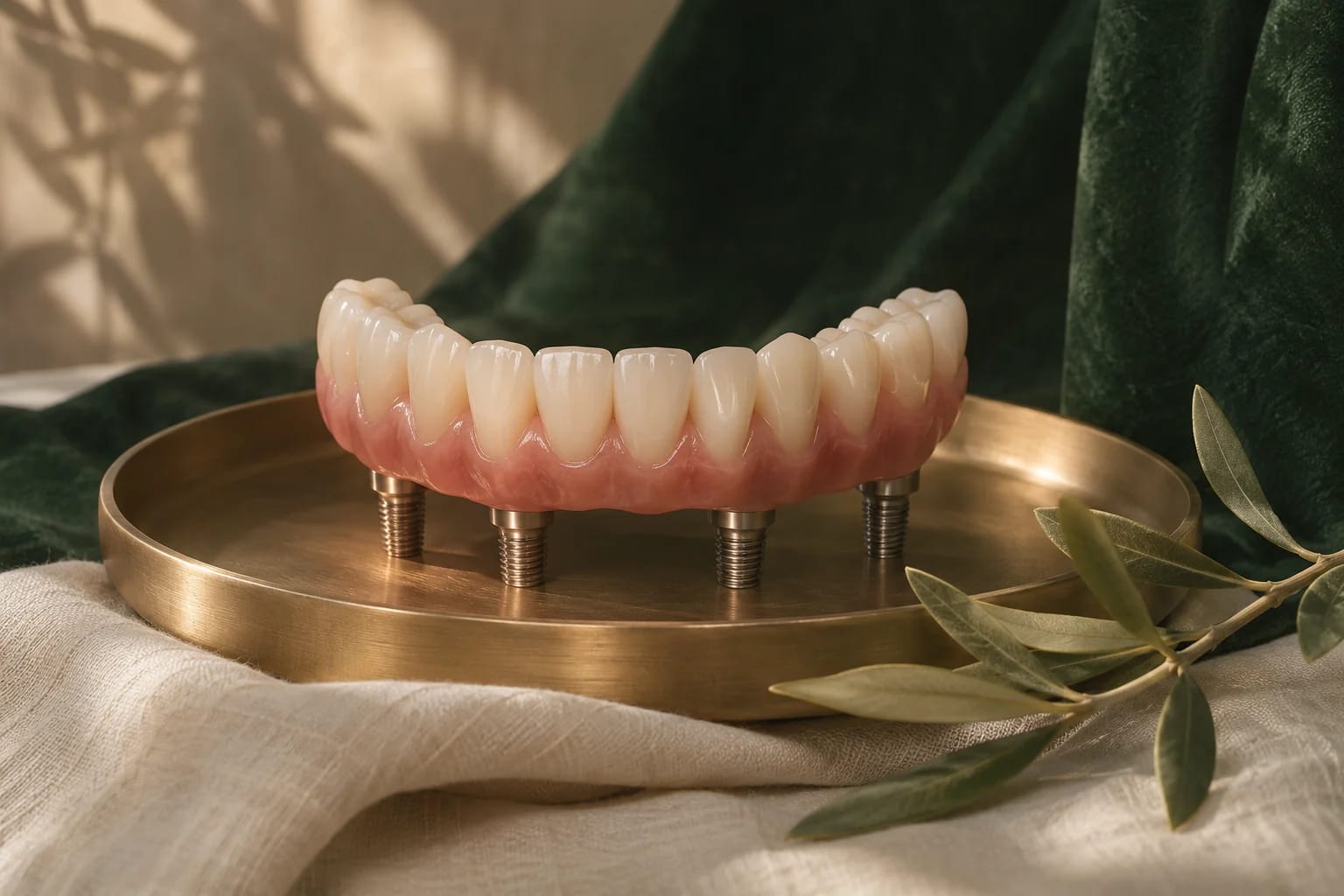
All-on-4 / All-on-6
A fixed full set of teeth on four or six implants, when all teeth are missing.
Learn more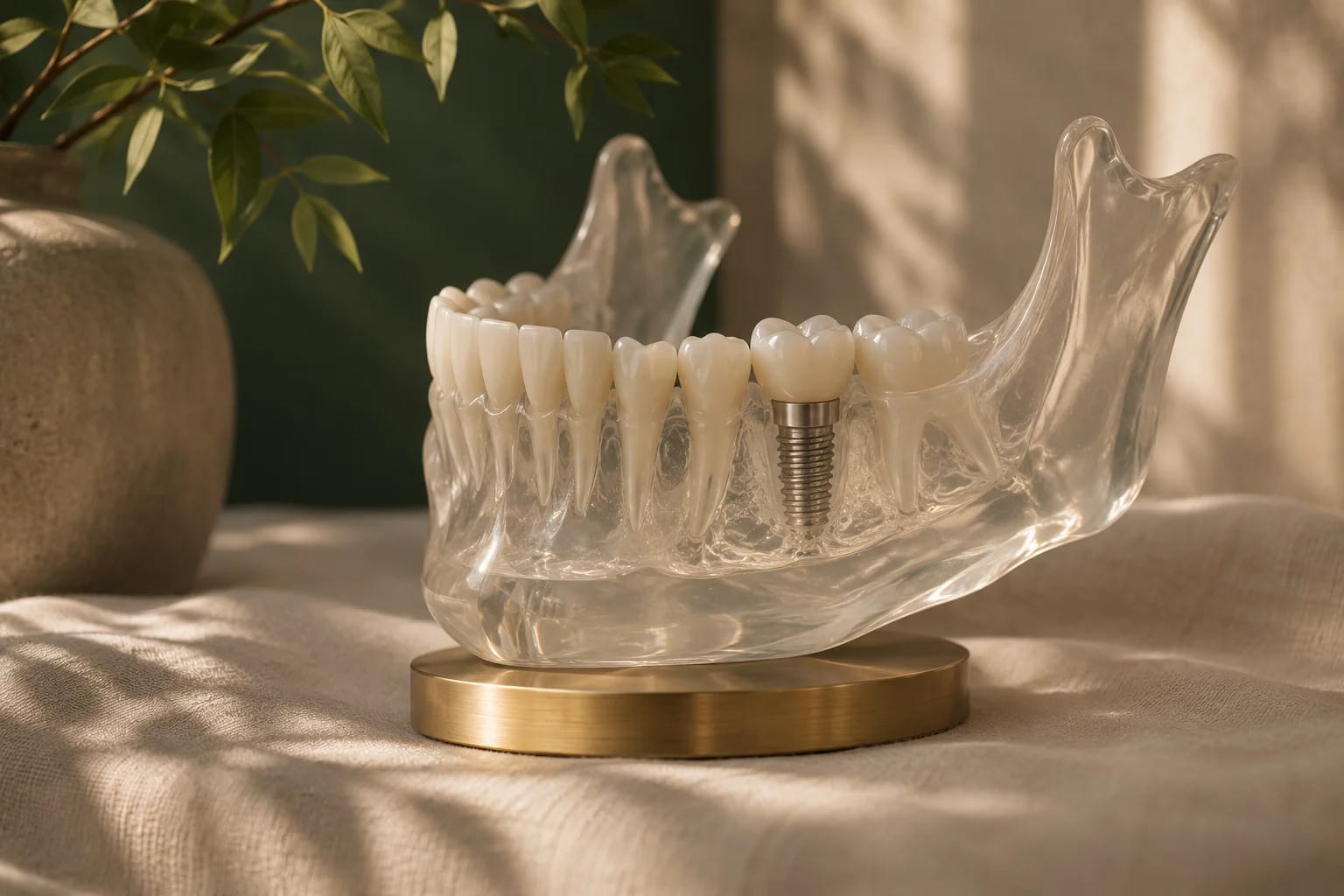
Oral surgery
Extractions, wisdom teeth, bone grafting and sinus lift, planned with a 3D scan.
Learn more